
Why Smart Inventory Management Is Essential for Growing Businesses
As businesses grow, so does the complexity of keeping stock under control. What starts as a simple spreadsheet quickly becomes a daily headache: missing items, duplicated orders, delayed deliveries, and unhappy customers. At this stage, inventory in operations management is no longer just a back-office task – it becomes a key driver of profitability, service quality, and business stability.
Whether you run a trading company in Dubai, a retail chain in the UAE, or a regional distribution business, effective stock control directly affects cash flow, customer satisfaction, and your ability to scale.
The Role of Inventory in Operations Management
Inventory is more than “goods on shelves.” It sits at the intersection of purchasing, sales, logistics, and finance. Good operations management makes sure that:
- You have enough stock to fulfil orders
- You don’t overstock and block cash in slow-moving items
- Items are stored in the right locations, close to where they are needed
- Teams can see the same real-time data, whether they’re in the warehouse, at a branch, or on the road
When inventory is managed properly, operations become predictable. Workflows are smoother, and managers can make decisions based on facts instead of guesses.
Common Inventory Challenges for Multi-Location Businesses
As soon as a business operates from more than one branch, warehouse, or showroom, inventory management becomes much harder. Typical problems include:
- Stock imbalance: One location is overstocked while another regularly faces shortages.
- No real-time visibility: Teams don’t know what’s available across all locations at any given time.
- Manual adjustments: Staff constantly send messages or spreadsheets to confirm stock levels.
- Lost sales: Orders are delayed or cancelled because items were “shown” as available but not actually on hand.
For example, a distributor like United Fish in the UAE (or any business handling perishable or fast-moving goods) cannot afford to guess where stock is or how much is left. Any delay or inaccuracy can quickly turn into waste, penalties, or lost contracts.

Why Multi-Location Tracking Is a Game-Changer
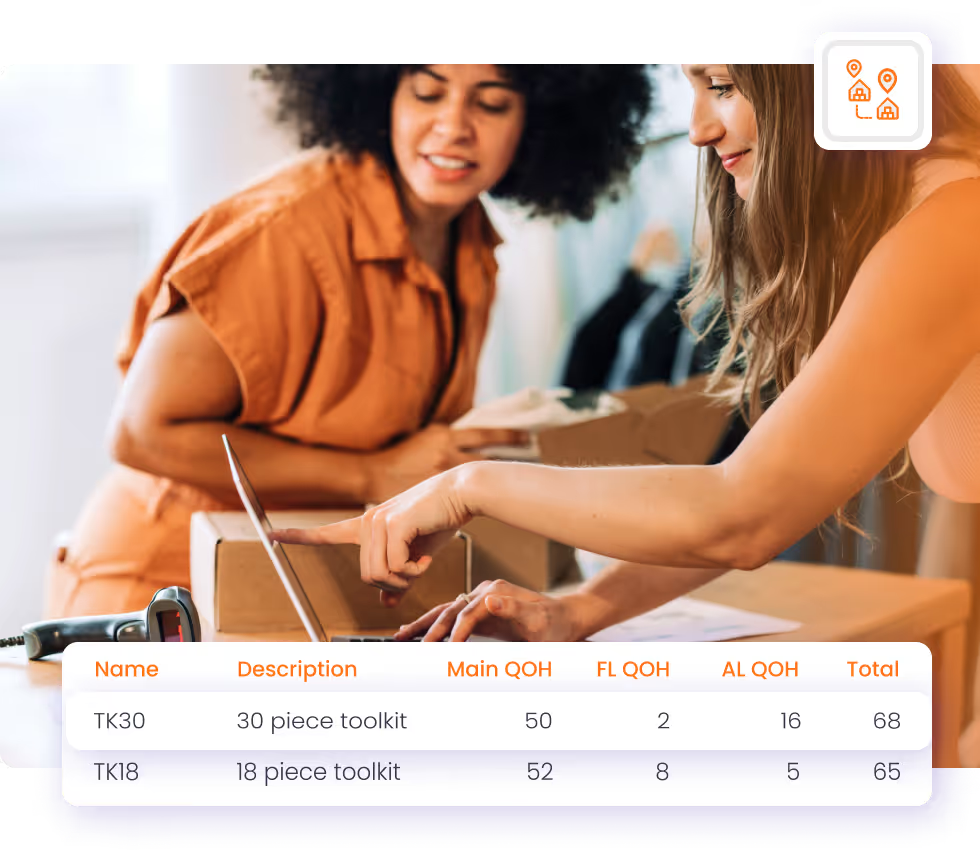
Multi-location inventory tracking is a structured way to monitor stock across several branches, warehouses, stores, or vans in real time. Instead of treating each location as a separate “island,” your system views them as parts of one connected network.
A strong solution for inventory in operations management will:
- Show stock levels per location and overall
- Allow easy transfers between locations
- Track which items move fastest in which branch
- Help planners decide where to place future stock
- Reduce the risk of emergency purchases and urgent shipments
By having real-time visibility, managers can shift from reactive firefighting to proactive planning.
Benefits of Using a Dedicated Inventory System
Using a dedicated software solution instead of spreadsheets offers important advantages:
1. Real-Time Accuracy
Data is updated as transactions happen – sales, returns, transfers, and adjustments. This allows staff to trust what they see on the screen.
2. Less Manual Work
Barcode scanning, mobile apps, and automated updates help reduce typing, copying, and re-checking. This saves time and cuts down on human error.
3. Better Decision-Making
Reports on stock turnover, dead stock, and top-performing locations help managers decide what to reorder, where to store it, and when to run promotions.
4. Stronger Customer Service
When teams know exactly what is available and where, they can confirm orders quickly, commit to realistic delivery times, and avoid surprises for the customer.
Connecting Multi-Location Tracking with Daily Operations
For operations teams, inventory is connected to almost every daily activity:
- Sales: Confirming stock before promising delivery dates
- Procurement: Planning purchase orders based on real usage, not guesswork
- Logistics: Organising transfers and deliveries from the nearest location
- Finance: Understanding how much capital is tied up in stock
A good system doesn’t just store data – it supports actions. That’s why solutions offering advanced tools for inventory in operations management are so valuable. They handle multi-location tracking, stock movement, and reporting in a way that fits real business workflows.
Multi-Location Inventory for SMEs and Growing Companies
Many small and medium-sized businesses think advanced inventory tools are “only for big companies.” In reality, SMEs often benefit the most because:
- They usually operate with tighter cash flow
- They cannot afford large write-offs or wasted stock
- They need lean teams, so every manual task hurts productivity
- They are in a growth phase where every customer and order matters
With the right system in place, even a small team can manage several locations professionally and confidently.
Practical Steps to Improve Inventory Operations
If you want to improve inventory within your operations management framework, here are some practical steps:
- Map your locations
List all branches, warehouses, shops, and vehicles that hold stock. - Standardise item codes and descriptions
Make sure the same product isn’t named differently in different places. - Introduce a centralised inventory system
Move away from isolated spreadsheets and start using a dedicated tool that supports multi-location tracking. - Train your team
Show staff how to record movements correctly – receiving, transfers, sales, and adjustments. - Review reports regularly
Use system reports to spot slow-moving items, best-sellers, and locations that need more or less stock.
Conclusion: Turn Inventory into a Strategic Advantage
Inventory doesn’t have to be a constant source of stress. Managed properly, it becomes a strategic advantage that supports growth, stability, and better customer relationships.
By focusing on clear processes, real-time visibility, and reliable multi-location tracking, businesses can transform inventory from a problem area into one of their strongest operational assets. For companies that are ready to grow beyond a single store or warehouse, investing in smarter inventory tools is not just a nice upgrade – it’s an essential step toward long-term success.
Related Reading: Key Considerations When You Shop Office Furniture
Related Reading: How To Make a Great Resume