
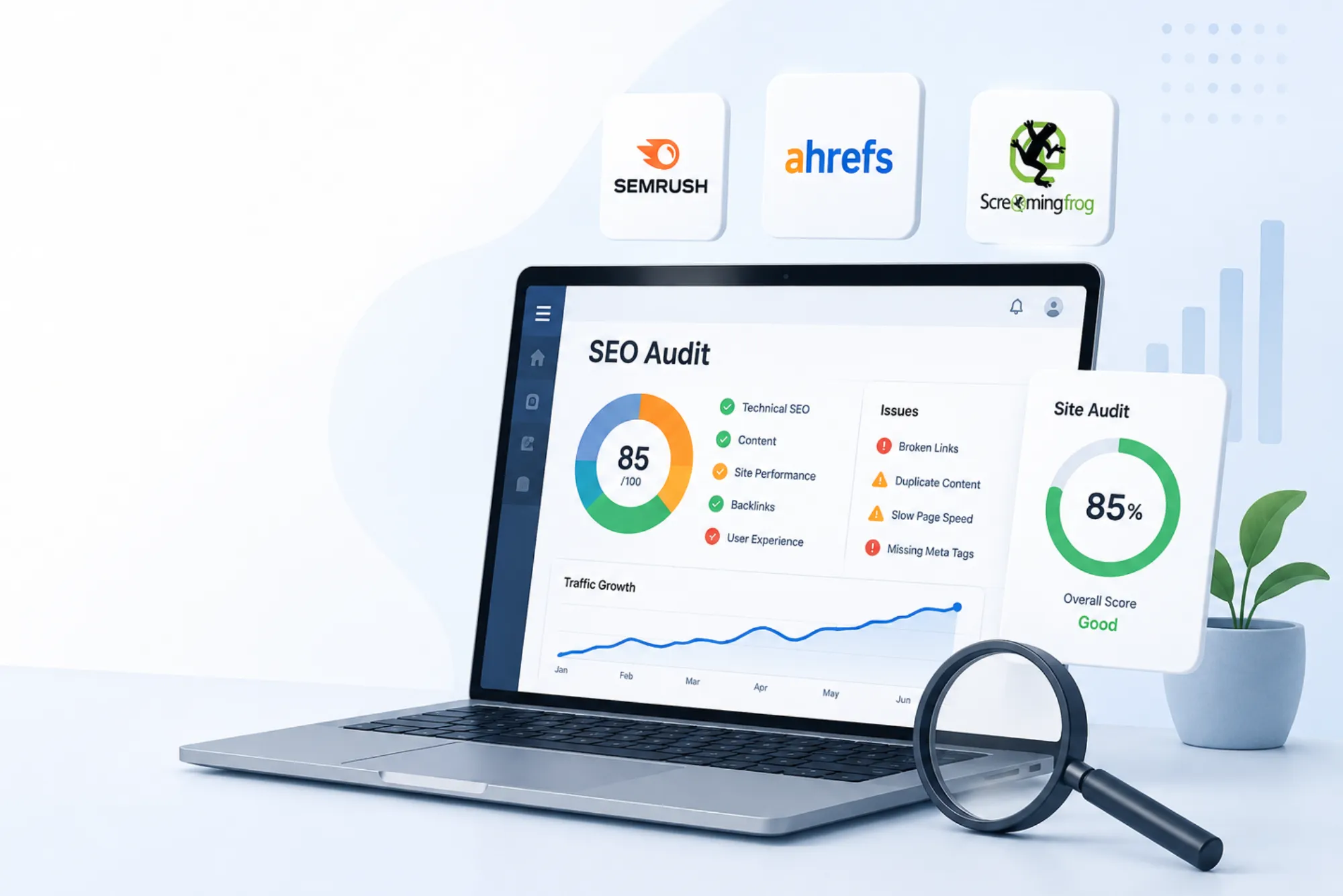
Search visibility in 2026 depends on far more than publishing optimized blog posts. Content teams now compete in an environment shaped by AI-generated search experiences, stricter technical standards, evolving indexing systems, and increasingly complex user behavior signals. Even high-quality content can struggle to rank when hidden technical or structural SEO problems limit performance.
The best SEO audit tools for content teams help identify the exact issues preventing organic growth. From crawl errors and internal linking gaps to duplicate content and slow-loading pages, modern audit platforms give editors, strategists, and SEO specialists a clearer picture of what blocks visibility.
For businesses building long-term organic traffic strategies, understanding how SEO connects with broader digital visibility is essential. Strong technical infrastructure often works alongside modern media strategies such as video-driven brand marketing to improve engagement and discoverability across multiple channels.
Search Intent Behind SEO Audit Tool Queries
Most users searching for SEO audit tools fall into the commercial investigation category. They are comparing platforms, evaluating features, and looking for practical solutions to improve rankings, traffic retention, and content performance.
Content teams typically want tools that can:
- Detect technical SEO problems quickly
- Improve content optimization workflows
- Monitor crawlability and indexing
- Identify weak internal linking structures
- Track page experience and Core Web Vitals
- Support collaboration between writers and SEO teams
What Makes an SEO Audit Tool Valuable in 2026?
Modern SEO audits go beyond simple metadata checks. Search engines now evaluate websites using hundreds of signals tied to quality, usability, semantic relevance, and technical performance.

The most effective SEO audit software should combine technical diagnostics with actionable recommendations that content teams can implement without relying entirely on developers.
| Feature | Why It Matters |
|---|---|
| Technical Crawl Analysis | Finds indexing, redirect, and broken-page issues |
| Content Optimization Insights | Improves topical relevance and keyword targeting |
| Internal Link Auditing | Strengthens content authority distribution |
| Page Speed Monitoring | Helps improve user experience and rankings |
| Schema Validation | Supports enhanced search visibility |
| Collaboration Features | Allows writers, editors, and SEO teams to work efficiently |
| AI-Powered Recommendations | Speeds up prioritization and issue resolution |
Top SEO Audit Tools Content Teams Should Consider
1. Screaming Frog SEO Spider
Screaming Frog remains one of the most trusted technical SEO audit tools for agencies and enterprise teams. Its crawler can detect broken links, duplicate content, missing metadata, redirect chains, orphan pages, and JavaScript rendering issues.
Content strategists particularly benefit from its ability to identify thin content pages and poor internal linking structures. The tool also integrates with analytics platforms to provide deeper traffic analysis.
Its desktop-based structure may require some technical understanding, but the depth of data makes it invaluable for serious SEO work.
2. Semrush Site Audit
Semrush offers one of the most accessible audit systems for content-focused teams. The platform combines technical SEO analysis with keyword tracking, backlink monitoring, and competitive research.
Its visual reporting system helps editorial teams quickly understand:
- Crawlability problems
- HTTPS implementation issues
- Duplicate content risks
- Slow-loading pages
- Structured data errors
- Internal linking weaknesses
Many organizations also use Semrush alongside broader business analytics platforms similar to resources found within the finance insights section of industry-focused websites where performance tracking and strategic reporting play a major role in decision-making.
3. Ahrefs Site Audit
Ahrefs continues to evolve beyond backlink analysis and now provides one of the strongest site auditing experiences for large-scale content operations.
The platform excels at identifying:
- Indexability issues
- Redirect errors
- Duplicate pages
- Low-performing content clusters
- Broken outbound links
- JavaScript rendering problems
Its Content Explorer feature also helps editorial teams discover content decay opportunities where rankings and traffic have gradually declined over time.
4. Google Search Console
No SEO audit workflow is complete without Google Search Console. While it lacks some advanced crawling functionality found in premium tools, it provides direct insight into how Google indexes and interprets website content.
Search Console helps teams monitor:
- Coverage and indexing reports
- Manual penalties
- Core Web Vitals
- Mobile usability
- Search query performance
- Click-through rates
For content teams focused on traffic growth, Search Console data often reveals hidden opportunities where pages rank well but fail to attract clicks due to weak titles or descriptions.
5. Sitebulb
Sitebulb has become increasingly popular because of its highly visual reporting system. The platform simplifies technical SEO concepts, making it easier for writers, editors, and marketing managers to collaborate.
Its crawl maps and prioritization system help teams focus on the issues with the greatest ranking impact first.
One major advantage is its educational reporting style, which explains why each SEO issue matters instead of only listing errors.
6. Surfer SEO
Surfer SEO focuses heavily on content optimization and on-page relevance. While not a pure technical auditing tool, it complements technical platforms by helping writers align content with current search intent patterns.
The platform analyzes top-ranking competitors and recommends improvements related to:
- Keyword coverage
- Semantic relevance
- Heading structure
- Word count balance
- Entity optimization
- Content readability
For editorial teams publishing at scale, Surfer helps standardize SEO quality across multiple writers.
Common Traffic-Blocking Issues SEO Audit Tools Reveal
Many websites lose substantial organic traffic because hidden technical problems remain unresolved for months. Modern audit platforms uncover issues that manual reviews often miss.
| SEO Issue | Impact on Traffic | Recommended Action |
|---|---|---|
| Broken Internal Links | Weakens crawl efficiency and user experience | Repair or redirect broken URLs |
| Duplicate Content | Confuses search engine indexing | Use canonical tags and content consolidation |
| Slow Page Speed | Increases bounce rates | Optimize images and server response times |
| Orphan Pages | Prevents proper content discovery | Add contextual internal links |
| Thin Content | Reduces topical authority | Expand and improve content depth |
| Improper Redirects | Wastes crawl budget | Fix redirect chains and loops |
| Missing Structured Data | Limits enhanced SERP visibility | Add schema markup where relevant |
Why Internal Linking Matters More Than Ever
Internal linking has become a major ranking signal for topical authority and content relationships. SEO audit tools frequently expose weak site architecture that prevents important pages from receiving authority.
Well-structured internal linking helps search engines understand:
- Content hierarchy
- Topic clusters
- Page importance
- User navigation flow
- Semantic relationships between articles
Websites with strong internal linking often experience improved crawl efficiency and longer user engagement sessions.
Businesses focused on digital growth frequently combine SEO architecture improvements with operational optimization platforms similar to enterprise software management solutions that streamline workflows and reporting processes.
How AI Is Changing SEO Audits in 2026
Artificial intelligence now plays a larger role in SEO diagnostics. Many leading audit platforms use machine learning to prioritize issues based on ranking impact rather than simply generating large lists of technical warnings.
AI-assisted SEO audits can now:
- Predict ranking volatility
- Identify content cannibalization
- Recommend topic expansions
- Detect declining search intent alignment
- Forecast traffic opportunities
- Suggest semantic keyword improvements
These features help content teams move faster without sacrificing quality.
Industry-standard SEO documentation and evolving search quality guidelines can also be reviewed through trusted resources such as [Insert relevant reference link here] for deeper technical understanding.
Choosing the Right SEO Audit Tool for Your Team
The best platform depends largely on team size, technical expertise, publishing frequency, and business goals.
For Small Content Teams
Smaller editorial operations often benefit from all-in-one platforms like Semrush or Surfer SEO because they combine optimization, tracking, and reporting within a single interface.
For Agencies
Agencies managing multiple client websites usually require advanced crawling and scalable reporting systems such as Screaming Frog, Ahrefs, or Sitebulb.
For Enterprise Publishers
Large publishers need audit systems capable of handling massive site structures, JavaScript rendering, international SEO requirements, and collaboration across departments.
How Often Should Content Teams Run SEO Audits?
SEO audits should not be treated as occasional maintenance tasks. Modern websites change constantly due to new content, CMS updates, plugin changes, migrations, and algorithm updates.
A practical audit schedule typically looks like this:
| Audit Type | Recommended Frequency |
|---|---|
| Technical Site Crawl | Weekly |
| Content Quality Review | Monthly |
| Internal Link Audit | Monthly |
| Core Web Vitals Check | Bi-weekly |
| Full SEO Audit | Quarterly |
Teams that audit consistently usually identify ranking risks before traffic losses become severe.
Signs Your Website Needs an Immediate SEO Audit
Several warning signs suggest hidden SEO problems may already be limiting organic growth.
- Sudden traffic declines
- Pages disappearing from search results
- High bounce rates
- Slow indexing of new content
- Falling click-through rates
- Unexpected ranking volatility
- Reduced crawl activity
Ignoring these indicators often allows technical debt to grow, making recovery more difficult later.
Even location-based informational websites and operational portals such as regional statistics platforms rely heavily on clean technical SEO structures to maintain visibility and accessibility across search engines.
Frequently Asked Questions
What is the best SEO audit tool for content teams?
The best SEO audit tool depends on your workflow and technical needs. Semrush and Ahrefs are strong all-around choices, while Screaming Frog excels in technical crawling and Surfer SEO focuses on content optimization.
Are free SEO audit tools enough for growing websites?
Free tools like Google Search Console provide valuable insights, but growing websites often require deeper crawling, automation, and reporting features available in paid platforms.
How long does a full SEO audit take?
A complete SEO audit may take anywhere from a few hours to several weeks depending on website size, technical complexity, and the depth of analysis required.
Can SEO audit tools improve rankings directly?
SEO audit tools themselves do not improve rankings automatically. They identify issues and opportunities that teams can act on to improve technical performance and content quality.
Why do content teams need technical SEO audits?
Even excellent content may fail to rank when technical issues block indexing, slow page performance, or weaken internal linking structures. Technical audits help uncover these hidden problems.
Conclusion
The best SEO audit tools for content teams in 2026 do far more than generate technical reports. They provide strategic visibility into the problems that quietly prevent content from reaching its full traffic potential.
As search algorithms continue evolving, successful teams will rely on continuous auditing, stronger internal linking, better semantic optimization, and data-driven content improvements to remain competitive. Whether managing a growing niche website or a large enterprise publication, investing in reliable SEO audit software has become essential for sustainable organic growth.
Related Reading: Affordable SEO Tools for Content Teams on a Practical Budget in 2026
Related Reading: Best Keyword Research Tools for Content Teams targeting topics that can bring more organic visitors in 2026
Related Reading: What Are SEO Tools for Content Teams and Which Features Matter Most in 2026?
Related Reading: EDGE Group: Celebrating Five Years of Innovation and Strategic Growth